Crane Fly Bite: Symptoms, Danger & Treatment (2026)
Crane flies look like giant mosquitoes, but here's the part almost nobody expects: most of them are physically incapable of biting you. If you're staring at a mark and blaming the long-legged insect on your ceiling, the real cause is very likely something else entirely.
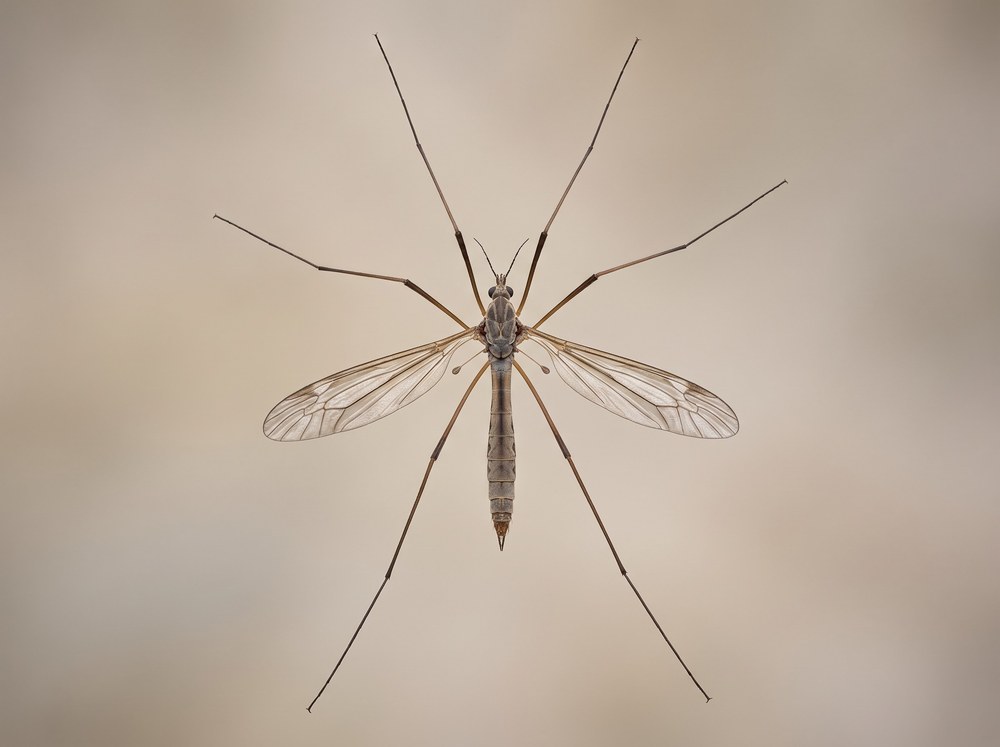
What a Crane Fly "Bite" Really Looks Like
There's no puncture wound to describe, because most crane flies never make contact with skin in a way that could leave one. Their legs are long, thin, and easily broken off, built for landing and mating displays, not for gripping or piercing. When a crane fly lands on you, what you feel is a light touch of legs or wings, not a stab.
What you're usually looking at afterward is a small, raised, pink-to-red bump with mild surrounding puffiness — the classic look of a mosquito bite, since mosquitoes share the same damp habitats and warm-season timing as crane flies. It may itch within minutes and stay tender to the touch for a day or two.
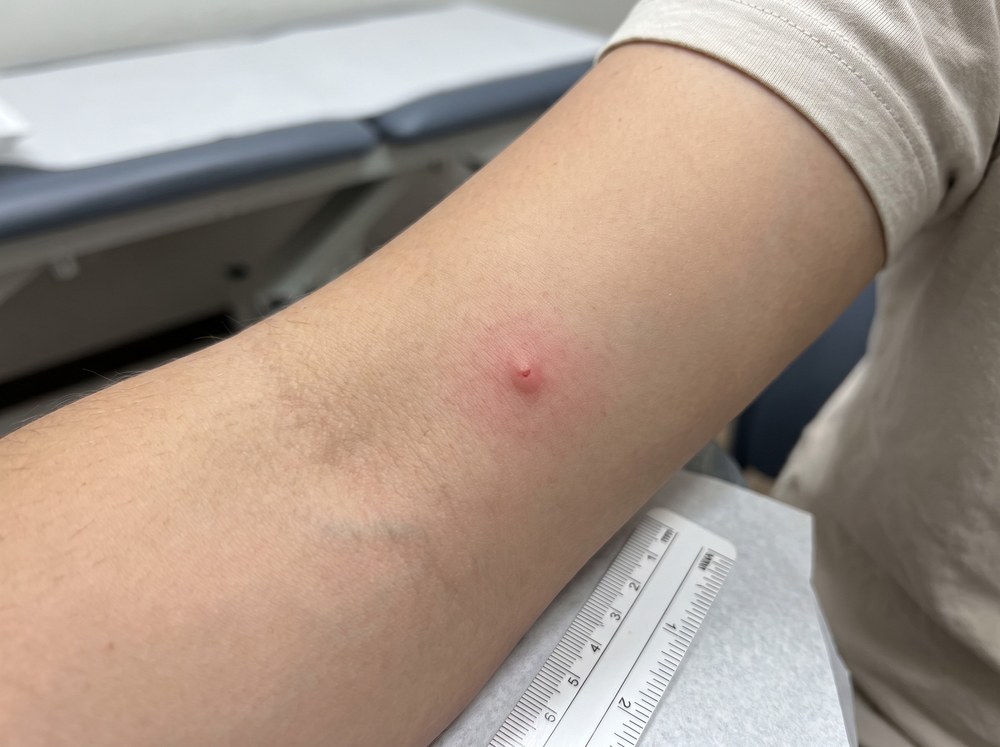
A true bull's-eye pattern, blister, or dark center is not something a crane fly can cause, since it has no venom or saliva to inject. If you see one of those patterns, it points toward a tick, spider, or a more severe allergic reaction to another insect's bite, not toward the crane fly you noticed on the wall.
This illustrated crane fly species identification guide breaks down the wing angle, leg length, and body shape people use to rule out mosquitoes and confirm what they're actually seeing at a glance.
Bite Symptom Checker
Check every symptom you're currently experiencing from the mark you found. Get a plain-English risk read.
Is a Crane Fly Bite Dangerous?
The honest answer is that there's no such thing as a dangerous crane fly bite, because the bite itself doesn't happen. Adult crane flies carry no venom, no saliva-borne pathogens, and no mechanism for breaking skin, so they pose zero direct medical risk to people or pets.
The real risk, if there is one, sits with whatever actually caused the mark you're treating. Mosquitoes are the most likely candidate given the shared habitat and season, and while the large majority of mosquito bites are harmless local reactions, mosquitoes can occasionally transmit viral illness — a risk that's easy to miss if a mark gets wrongly filed away as "just a crane fly."
Children, older adults, and anyone with a known insect-bite allergy are more likely to have a stronger local or systemic reaction to an actual bite, regardless of species. People with a history of "skeeter syndrome" — an exaggerated swelling reaction to mosquito saliva — should watch new bites a little more closely than average.
Bottom line: monitor the actual mark, not the crane fly, for 48 hours. If swelling keeps expanding, fever develops, or you notice symptoms beyond the bite site itself, that warrants a call to a medical professional.
Wondering how serious your actual bite is?
Run the Symptom CheckerSymptom Timeline
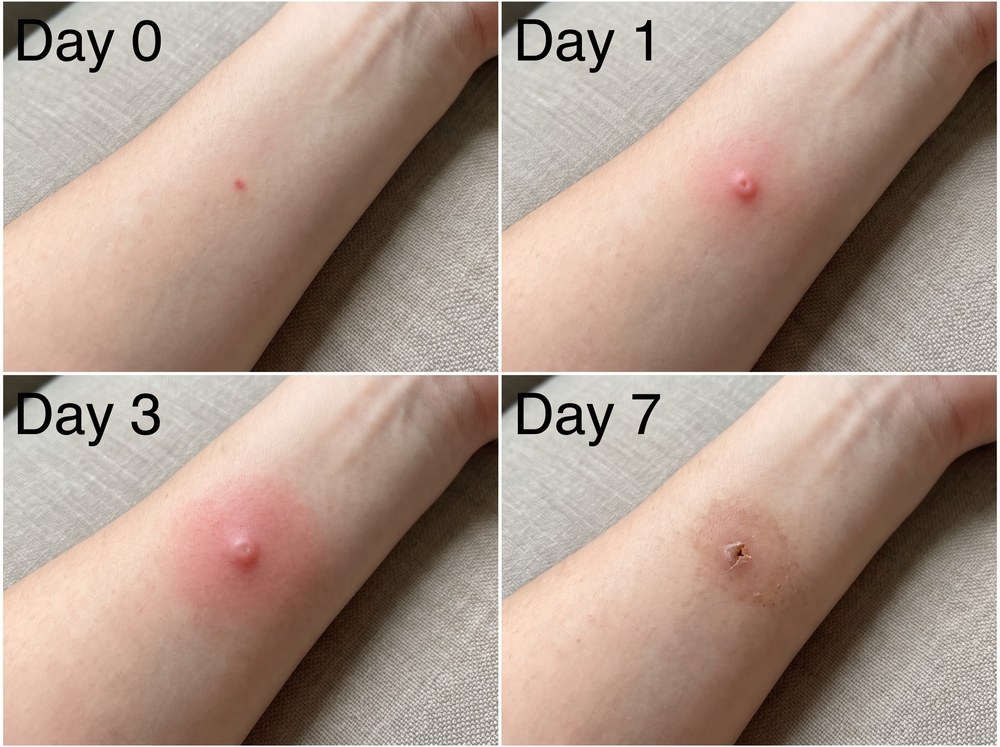
Hours 0–2. A small, itchy, pink bump typically appears within minutes to two hours of the actual bite (not the crane fly sighting). Itching and mild swelling tend to build during this window.
Hours 2–8. Redness and puffiness usually peak, and the itch can feel most intense. A halo of mild swelling around the central bump is common and expected at this stage.
Day 1–2. Most marks plateau and begin fading, with itching easing as the day goes on. The bump softens and the redness starts shrinking inward from the edges.
Day 3–7. The large majority of bites resolve completely within this window with no scarring. If the mark is still actively worsening, spreading, or newly painful at day 3 or beyond, that's no longer a normal healing curve and it's time to seek medical care.
Which Bug Bit Me?
Not sure it was really a crane fly? Answer three questions and we'll narrow the list.
For a broader visual sweep beyond these three questions, an insect identifier tool can help confirm the match from a photo.
Treatment
Wash and elevate. Clean the actual mark with soap and water, and elevate the limb briefly if it's on an arm or leg to keep swelling down.
Cool, don't heat. A cool, damp cloth or ice pack wrapped in a towel for 10-15 minutes calms itching and swelling far better than heat, which can worsen inflammation on a fresh bite.
OTC support. An oral antihistamine or a topical hydrocortisone or calamine cream controls most of the itching and redness within a day or two. If you're trying to confirm what actually bit you before treating, the BugKnow app can help — you can snap a photo to identify a crane fly instantly and rule it out as the cause.
Watch, don't wrap. Leave the mark uncovered so you can monitor it, and circle the edge of any redness with a pen. Escalate to medical care if the circle keeps growing past 48 hours, or if fever appears.
Prevention
Because crane flies don't bite, "prevention" here really means two separate things: keeping the harmless adults out of your house, and controlling the insects that actually do bite. For crane flies themselves, sealing gaps around doors and windows and reducing bright outdoor lighting near entrances cuts down on the clumsy nighttime visitors drawn in from the lawn.
For the actual biting insects sharing that same yard, eliminate standing water where mosquitoes breed, keep grass trimmed, and use an EPA-registered repellent during peak dawn-and-dusk activity. If you've spotted more than a few crane flies indoors repeatedly, a lawn moisture and drainage check is warranted, since damp turf is what draws their egg-laying females in the first place.
Wondering whether to head to urgent care?
Take the Decision TreeShould You See a Doctor?
A short decision tree based on CDC and Mayo Clinic guidance.
1 / 3 Is there swelling in your face, lips, tongue, or throat, or any trouble breathing or swallowing?
2 / 3 Is the redness spreading rapidly, feeling hot, or paired with fever or chills?
3 / 3 Has the mark been getting steadily worse for more than 48 hours with no improvement?
Frequently Asked Questions
Do crane flies actually bite humans?
No. Most crane fly species have no functional mouthparts at all, and the few that do only sip nectar or dew. None have the piercing structures needed to break human skin. There is no documented case of a crane fly biting a person. If you felt something and found a mark afterward, the mark almost certainly came from a different insect that happened to be nearby.
Why do I feel a pinch when a crane fly lands on me?
That sensation is usually the crane fly's long, thin legs gripping your skin or hair as it lands or tries to steady itself, not a bite. Some people also feel the brush of its wings. Because crane flies fly clumsily and often bump into people, the contact can feel startling even though no puncture or venom is involved.
Can crane flies sting?
No. Crane flies have no stinger and no venom gland. The pointed tail segment sometimes visible on females is an ovipositor, an egg-laying organ used to deposit eggs into soil or turf, not a weapon. It can look sharp, which fuels the misconception, but it cannot puncture skin or deliver any kind of sting.
How can I tell a crane fly from a mosquito?
Look at size and legs first: crane flies are noticeably larger with legs roughly twice as long relative to their body, and they hold their wings out at rest rather than folded flat. Mosquitoes are smaller, have a visible needle-like proboscis, and scaled wings. If the insect you're seeing is inch-long and gangly, it's a crane fly, not a mosquito.
Are crane flies dangerous to pets, like dogs or cats?
No. Crane flies carry no venom and no disease that affects pets, and a cat or dog that catches or eats one is very unlikely to have any reaction beyond, occasionally, mild and short-lived stomach upset from swallowing any insect. There is no toxin to worry about, unlike with some stinging insects or certain toads.
Why are crane flies called "mosquito hawks" if they don't eat mosquitoes?
The nickname comes from their mosquito-like silhouette, not their diet. Adult crane flies rarely eat anything, and their larvae feed on decaying plant matter and roots in the soil, not on other insects. Despite persistent folklore, entomologists have repeatedly confirmed that crane flies do not hunt or consume mosquitoes at any life stage.
How long until I know if my bite is something to worry about?
Most insect bites peak in redness and itching within 24 to 48 hours, then start fading over the following days. If a mark keeps expanding, feels increasingly hot, or is joined by fever, chills, or swollen lymph nodes past that 48-hour window, treat it as a signal to get evaluated rather than waiting further, regardless of which insect caused it.
If a crane fly didn't bite me, what did?
Since crane flies lack the mouthparts required to break skin, a mark that appeared while one was nearby almost always comes from another insect sharing the same damp habitat, most often a mosquito, since both appear in the same warm, wet months. Biting midges and fleas are the next most likely culprits, especially with ankle or sock-line marks. Because mosquitoes remain the most probable source, it is worth learning to prevent mosquito bites going forward.
Take 30 seconds to check your bite now.
Check My SymptomsHave a specific question? Browse the Crane Fly Bite FAQ.
Need help comparing photo options? See our Top 7 House Insect Identification Picks in 2026.