What does a crane fly bite look like?
A crane fly bite does not look like anything because adult crane flies cannot bite humans. These large, spindly insects lack functioning mouthparts capable of piercing your skin or injecting venom. If you notice a red bump, mild swelling, or an itchy mark after seeing one nearby, another insect or skin irritant is responsible for the reaction. While crane flies look like giant mosquitoes, they are completely harmless to people and pets. Understanding what actually caused your skin mark can help you choose the right soothing care.
Bite Symptom Checker
Check every symptom you're currently experiencing from the mark you found. Get a plain-English risk read.
Can a crane fly actually bite you?
Adult crane flies look intimidating due to their long legs and resemblance to giant mosquitoes, but they are physically incapable of biting you. Their mouthparts are either nonexistent or adapted only for sipping tiny amounts of nectar and water. They do not feed on blood, nor do they possess stingers or defensive venom.
When you discover a welt or tender spot on your skin, the mark came from a completely different source. People often see a crane fly resting nearby and assume it caused their discomfort. Knowing that these fragile insects cannot harm your body helps narrow down what might truly be affecting your skin today.
What are you feeling on your skin?
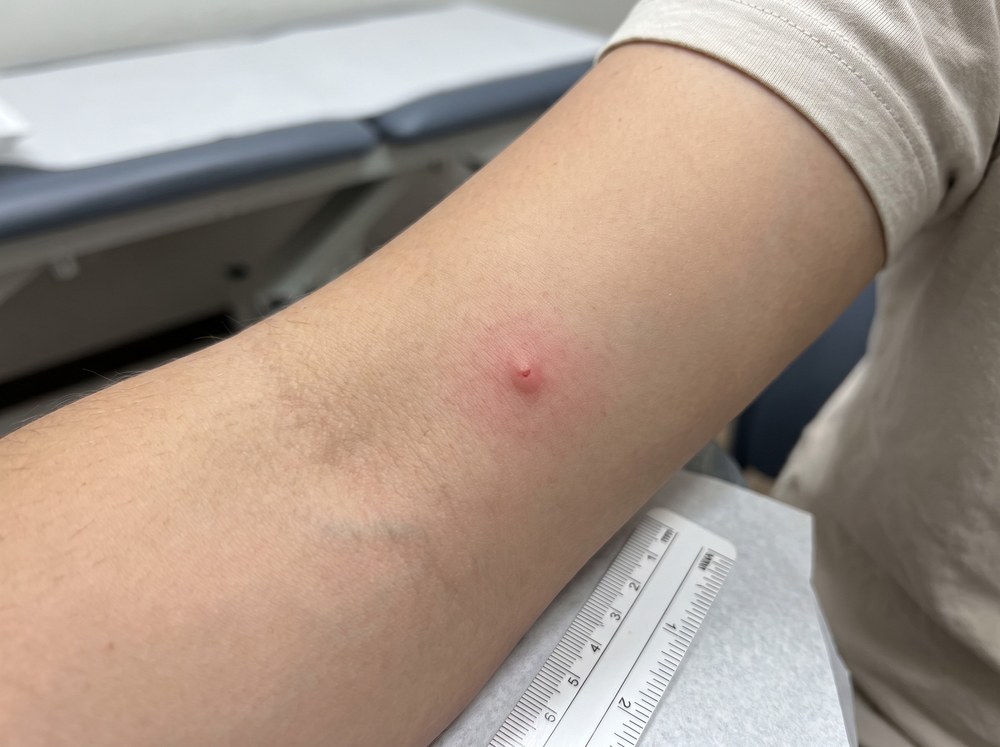
If you have a mystery mark that you suspect came from an insect, you might feel mild itching, warmth, or slight tenderness. The area might appear as a small pink bump, a raised circle, or a tiny pinpoint dot. These surface reactions often develop when your immune system responds to mild local irritation.
Most minor skin marks remain small and stay confined to one spot. You might feel an urge to scratch, which can make the area look brighter red or slightly puffy. Paying close attention to your physical sensations helps you separate ordinary surface itchiness from spreading irritation or deeper skin discomfort.
How long do typical skin marks last?
A typical minor bug bump or contact reaction usually peaks within the first day or two before fading away. You should see redness and swelling gradually decrease over three to seven days without special intervention. The mild itching generally settles down as your skin repairs its outer barrier.
Changes that deserve closer attention include swelling that expands significantly after twenty-four hours or pain that steadily worsens. If your skin feels increasingly hot to the touch or develops yellow crusting, those shifts indicate complications beyond a simple, resolving reaction. Watching the timeline keeps your self-care safe and grounded.
What else might have caused the bump?
Because crane flies cannot pierce your skin, several common backyard culprits might explain the spot you found:
Contact with rough garden plants, carpet fibers, or localized skin blemishes can also mimic a tiny bite. Because many surface reactions look nearly identical, you cannot reliably name the cause by appearance alone. Reviewing your recent outdoor activities often provides the best clues.
- Female mosquitoes seeking blood meals in shaded or damp outdoor spots
- Tiny biting midges or gnats that go unnoticed in your yard
- Fleas, bedbugs, or small outdoor mites resting on grass blades
How can you track the mark at home?
Tracking your skin mark at home gives you objective details if you later consult a doctor. Take a clear, well-lit photo of the spot each morning to see if the size or color changes over time. You can also use a skin-safe pen to draw a light circle around the initial red border.
Note how your body feels throughout the day, including changes in itchiness or warmth. Writing down when you first noticed the mark and any new symptoms provides a reliable record. This simple routine keeps your observations organized and takes the guesswork out of monitoring your skin's healing process.
How can you soothe the irritated spot?
Start by gently washing the area with mild soap and cool tap water to remove any lingering irritants from your skin. Pat the surface dry with a clean cloth rather than rubbing vigorously. Applying a cool, damp washcloth or wrapped ice pack for ten minutes can help calm active itching and reduce local puffiness.
Over-the-counter hydrocortisone cream or plain calamine lotion can provide additional comfort for your irritated skin. Try your best to avoid scratching the spot, as fingernails can break the skin surface and introduce bacteria. Keeping your fingernails trimmed short also prevents accidental damage while you sleep.
When should you seek medical attention?
Most minor insect encounters resolve quickly on their own, but certain warning signs require a prompt visit to a healthcare clinic. You should seek medical evaluation if you develop red streaks spreading from the bump, increasing warmth, or fluid draining from the center. A fever or body aches also signal a need for professional evaluation.
If you ever experience facial swelling, dizziness, tightness in your chest, or difficulty breathing, call for emergency help immediately. These severe reactions can be dangerous and need rapid treatment. Trust your instincts whenever a mark behaves unexpectedly or causes deep, throbbing pain.
What else might you want to know?
Do crane flies carry dangerous diseases?
No, crane flies do not carry or transmit diseases to humans. Because they do not feed on human blood or puncture skin, they cannot pass parasites, viruses, or bacteria into your bloodstream. They are completely harmless insects that spend their brief adult lives focused strictly on mating and laying eggs.
Why do crane flies look so much like giant mosquitoes?
Crane flies belong to the same broader insect order as mosquitoes, which explains their similar long legs and slender bodies. However, crane flies belong to an entirely different family. Their large size is purely natural, and unlike female mosquitoes, crane flies never seek out humans or animals for blood.